“One who meditates upon and realizes the Self discovers that everything in the cosmos – energy and space, fire and water, name and form, birth and death, mind and will, word and deed, mantram and meditation – all come from the Self." The Upanishads, Eknath Easwaran translation,Narada's education, 26.1, p.140-141, Nilgiri Press. Kindle Edition.
The Upanishads came to the west rather late. Some of them appeared in translation between 1802 and 1804 and the first German translation of these was in 1808 and had a profound influence on Schopenhauer (C. G. Jung, Mysterium Coniunctionis, Princeton/Bollingen, 1970, p.517n). From these texts he was able to build on the writings of Kant and this bore fruit with his The World as Will and Idea. In his preface, he advises the reader to read it twice and after the first reading, to read an appended essay before the second reading. I can understand why this was necessary and faced part of his problem when I wrote my own book on the coinage of the Coriosolites, for certain subjects can only be understood in a holistic manner and (as I said in my book) a book is a linear vehicle of understanding. The other part of his problem is that eastern ways of thinking were totally alien to western people of his time and his efforts to circumvent the western patterns of thought resulted in more complexity and the use of more examples than would be necessary today for anyone with a basic grounding in quantum physics and/or depth psychology.
Jung says: "...the will, as disposable energy, gradually subordinates itself to the stronger factor, namely to the new totality-figure I call the self (On the Nature of the Psyche, p. 134, Princeton...) and (ibid, p. 80): "In Schopenhauer we find the unconscious Will as the new definition of God". Jung also says (Synchronicity: An Acausal Connecting Principle, p. 12):
"Schopenhauer believed in the absolute determinism of the natural process and furthermore in a first cause. There is nothing to warrant either assumption. ... The idea that the simultaneous points in the causal chains, or meridians, represent meaningful coincidences would only hold water if the first cause really were a unity.But if it were a multiplicity, which is just as likely, then Schopenhauer's whole explanation collapses, quite apart from the fact, which we have only recently realized, that natural law possesses a merely statistical validity and thus keeps the door open to indeterminism."
I should, perhaps, append the above paragraph by saying that Jung defines psychic energy as libido, but Freud only placed sex in that role. While sex is certainly part of the Jungian libido, it is only a very small of part of this vast totality which includes all mental energies.
I think a quote from physicist David Bohm would be apropos to finish with as Bohm also struggled with describing the whole and created his Rheomode as a better way of describing these ideas:
"We have got to see that thought is part of this reality and that we are not merely thinking about it, but that we are thinking it”. (On Creativity, p. 141)
or, one could come to understand the quote from the Upanishads that I started with.
Mark Twain said "write what you know", but Schopenhauer's essay on women, which few could deny is blatantly misogynistic, is studied from a philosophical perspective, or is praised to some degree in various anti-feminist rants which treat women as all being the same as rabidly as extremist "woman's- libbers" treated men in the days before feminism became a term. If you read a little about Schopenhauer's personal life you can see that his relationships with women were both limited and strained, and that includes the relationship with his mother. In selecting a painting to illustrate for this post, the one on the right seemed about the best to express the least objectionable aspects of Schopenhauer's thoughts on women, providing that we imagine that the mother is thinking about fashion and priming her daughter for the eventual ball where she will be introduced to a selected group of suitors. Regardless of philosophy or of personal experiences, Schopenhauer was still of his time.
I think it a better approach to treat Schopenhauer's essay as a glimpse into his psychology; his anima. The anima is often spoken of simply as a man's feminine side, but this is not exactly true. As it is an aspect repressed to various degrees, it does not represent a woman so much as a bad caricature of such and the female's animus does the same, in reverse, for men. It is easy for me to imagine, from reading of his relationships with women, that Schopenhauer had a good measure of repression in that particular department.
"The man who publishes and edits an article written by an anonymous critic should be held as immediately responsible for it as if he had written it himself; just as one holds a manager responsible for bad work done by his workmen. In this way the fellow would be treated as he deserves to be—namely, without any ceremony. "An anonymous writer is a literary fraud against whom one should immediately cry out, "Wretch, if you do not wish to admit what it is you say against other people, hold your slanderous tongue." "An anonymous criticism carries no more weight than an anonymous letter, and should therefore be looked upon with equal mistrust. Or do we wish to accept the assumed name of a man, who in reality represents a société anonyme, as a guarantee for the veracity of his friends? "The little honesty that exists among authors is discernible in the unconscionable way they misquote from the writings of others. I find whole passages in my works wrongly quoted, and it is only in my appendix, which is absolutely lucid, that an exception is made. The misquotation is frequently due to carelessness, the pen of such people has been used to write down such trivial and banal phrases that it goes on writing them out of force of habit. Sometimes the misquotation is due to impertinence on the part of some one who wants to improve upon my work; but a bad motive only too often prompts the misquotation—it is then horrid baseness and roguery, and, like a man who commits forgery, he loses the character for being an honest man for ever." Arthur Schopenhauer, On authorship and style.
Schopenhauer does not use the word authenticity in this essay but when you purchase some collectible online it might come with a certificate of authenticity stating it to be as described in the advertising copy. I have yet to see such a document called a guarantee of veracity. I take such documentation with a grain of salt. One object in my collection has such a document, but the object is not what the vendor claimed it to be. I did not return it for a refund because I bought it with the knowledge of what it really was and had it been correctly identified I would not have been able to afford it. I remember reading, somewhere, that if you purchased a forgery from a British antique dealer as a genuine item, then you can legally claim a refund, regardless of whether it came with a certificate of authenticity. However, if you sold such an item to an antique dealer then they could not get you to refund their money as they claim to be expert in such matters. It struck me as a very sensible law because who would want to put their trust in ignorance? Perhaps it no longer exists and that is why we have such certificates of authenticity. In Schopenhauer's time, authenticity was not the buzzword it is today. You have to be very careful about buzzwords: a company that prominently advertises its ethics, for example, is most often a company that has none. Schopenhauer's ire, in this part of his essay is directed toward deliberate anonymity and I get a number of blog comments from "anonymous". If they seem to be honest, I let them by. People are more fearful today than they used to be but this fear of authorship is even used as ploy to attack the person to whom it is directed. It hopes to solicit sympathy. We have lost many of our animal instincts. My dog, Tristan, is a coyote hybrid and retains more of his basic pack instinct than does a purely domestic breed. When on a leash, and encountering fear in a person his instinctual response is twofold: his hackles rise and he gives two short warning barks, Then, if the fearful behaviour continues, he bares his teeth and lunges toward that person. He knows that by being on a leash he cannot remove himself from the source of danger. But why would a fearful person be a source of danger? He has adopted a human as a member of his pack (actually family group is the case with coyotes, wolves hunt in packs). The instinct is to kill the source of danger because fleeing is not possible. In such an animal, fleeing is not fear, it is removing oneself from a source of danger. "Fight or flee" is not a measure of personality in the coyote, it is survival instinct and the choice is dependent on the situation at the time. Within a hunting pack (or family group) the instinct expressed is "If you are fearful you cannot be trusted and trust is essential to survival. After observing this in Tristan I came to the realization that every single person in my life who had given me any trouble, did so out of the fear of something. Schopenhauer, in that section of his essay, expresses more of that pack instinct than we commonly see today, but his pack consists of other authors. Authenticity, even as a buzzword, does not have to be nefarious and I give a good example of real social authenticity in my post: Nara + 20: Stakeholders, communities, and authenticity. However I also give, in the same post, an example of how the same subject matter is used for nefarious motives.
The Futility of Art: Postcultural semiotic theory, realism and libertarianism
1. Contexts of meaninglessness
If one examines presemanticist narrative, one is faced with a choice: either accept realism or conclude that language is capable of deconstruction. Sartre uses the term ‘textual rationalism’ to denote the role of the participant as artist. ...
The above quote is a meaningless, unique and machine-generated excerpt of an academic paper from the pomo-generator. Its section heading (after only three page reloads to avoid notations) is pure serendipity.
Criticisms of postmodernism based on the dismal quality of its academic writing are cases of mistaken identity. With some of its original authors, however, what at first glance seems overly verbose and difficult to understand is often a case of the author struggling with his language in order to select the precise wording for a concept that could easily be misinterpreted. I often have that problem, myself. It is not the postmodernist philosophy that is at fault, it is the affected academic writing style which is applied to whatever might be in vogue at the time.
This is why I can title this post "Schopenhauer and the postmodern". The latter is a major philosophy in our time and what Schopenhauer wrote was largely about the major philosophies of his own time. So it is the fact of academic fashion rather than the nature of any fashion which is really at fault. In other words, it is a matter of the Zeitgeist in and of itself.
I have taken excerpts from three of Schopenhauer's essays and present these quotes in the order in which they appear. The example of underlining is Schopenhauer's and my minimal interjections are enclosed by square parentheses. The selection process was not easy as there is so much more I could have used. I avoided passages that consisted of large numbers of examples not only to save space but because some of these examples would be less familiar to today's reader than they were in his time. The full essays can be read by following this link to the Internet Archive (Project Gutenberg). This was the translation used in my Google Play eBook. I have compared it with other English translations and found no differences in meaning, whatsoever. I recommend paying the small price for the eBook for the functionality of the medium (although it, absurdly, does not permit copying).
ON READING AND BOOKS
When we read, another person thinks for us: we merely repeat his mental
process. It is the same as the pupil, in learning to write, following
with his pen the lines that have been pencilled by the teacher.
Accordingly, in reading, the work of thinking is, for the greater part,
done for us. This is why we are consciously relieved when we turn to
reading after being occupied with our own thoughts. But, in reading, our
head is, however, really only the arena of some one else's thoughts. And
so it happens that the person who reads a great deal--that is to say,
almost the whole day, and recreates himself by spending the intervals in
thoughtless diversion, gradually loses the ability to think for himself;
just as a man who is always riding at last forgets how to walk. Such,
however, is the case with many men of learning: they have read
themselves stupid. For to read in every spare moment, and to read
constantly, is more paralysing to the mind than constant manual work,
which, at any rate, allows one to follow one's own thoughts. Just as a
spring, through the continual pressure of a foreign body, at last loses
its elasticity, so does the mind if it has another person's thoughts
continually forced upon it. And just as one spoils the stomach by
overfeeding and thereby impairs the whole body, so can one overload and
choke the mind by giving it too much nourishment. For the more one reads
the fewer are the traces left of what one has read; the mind is like a
tablet that has been written over and over. Hence it is impossible to
reflect; and it is only by reflection that one can assimilate what one
has read if one reads straight ahead without pondering over it later,
what has been read does not take root, but is for the most part lost.
Indeed, it is the same with mental as with bodily food: scarcely the
fifth part of what a man takes is assimilated; the remainder passes off
in evaporation, respiration, and the like. ...
From all this it may be concluded that thoughts put down on paper are
nothing more than footprints in the sand: one sees the road the man has
taken, but in order to know what he saw on the way, one requires his
eyes. ... [The difference in experiential from book learning]
It is because people will only read what is the newest instead of what
is the best of all ages, that writers remain in the narrow circle of
prevailing ideas, and that the age sinks deeper and deeper in its own
mire. ...
This condition of things shows why the scientific, literary, and
artistic spirit of the age is declared bankrupt about every thirty
years. During that period the errors have increased to such an extent
that they fall under the weight of their absurdity; while at the same
time the opposition to them has become stronger. At this point there is
a crash, which is followed by an error in the opposite direction.
To show the course that is taken in its periodical return would be the true
practical subject of the history of literature; little notice is taken
of it, however. ...
In German philosophy Kant's brilliant period
was immediately followed by another period, which aimed at being
imposing rather than convincing. Instead of being solid and clear, it
aimed at being brilliant and hyperbolical, and, in particular,
unintelligible; instead of seeking truth, it intrigued. Under these
circumstances philosophy could make no progress. Ultimately the whole
school and its method became bankrupt. For the audacious, sophisticated
nonsense on the one hand, and the unconscionable praise on the other of
Hegel and his fellows, as well as the apparent object of the whole
affair, rose to such a pitch that in the end the charlatanry of the
thing was obvious to everybody; and when, in consequence of certain
revelations, the protection that had been given it by the upper classes
was withdrawn, it was talked about by everybody. ...
ON AUTHORSHIP AND STYLE
No greater mistake can be made than to imagine that what has been written latest is
always the more correct; that what is written later on is an improvement on what was
written previously; and that every change means progress. Men who think and have
correct judgement, and people who treat their subject earnestly, are all exceptions
only. Vermin is the rule everywhere in the world: it is always at hand and busily
engaged in trying to improve in its own way upon the mature deliberations of the
thinkers. So that if a man wishes to improve himself in any subject he must guard
against immediately seizing the newest books written upon it, in the assumption that
science is always advancing and that the older books have been made use of in the
compiling of the new. They have, it is true, been used; but how? The writer often
does not thoroughly understand the old books; he will, at the same time, not use
their exact words, so that the result is he spoils and bungles what has been said in
a much better and clearer way by the old writers; since they wrote from their own
lively knowledge of the subject. He often leaves out the best things they have
written, their most striking elucidations of the matter, their happiest remarks,
because he does not recognise their value or feel how pregnant they are. It is only
what is stupid and shallow that appeals to him. An old and excellent book is
frequently shelved for new and bad ones; which, written for the sake of money, wear
a pretentious air and are much eulogised by the authors' friends. In
science, a man who wishes to distinguish himself brings something new to
market; this frequently consists in his denouncing some principle that
has been previously held as correct, so that he may establish a wrong
one of his own. Sometimes his attempt is successful for a short time,
when a return is made to the old and correct doctrine. These innovators
are serious about nothing else in the world than their own priceless
person, and it is this that they wish to make its mark. They bring this
quickly about by beginning a paradox; the sterility of their own heads
suggests their taking the path of negation; and truths that have long
been recognised are now denied...
In the secret consciousness that this is the condition of things, every mediocre
writer tries to mask his own natural style. This instantly necessitates his giving
up all idea of being naïve, a privilege which belongs to superior minds sensible of
their superiority, and therefore sure of themselves. For instance, it is absolutely
impossible for men of ordinary intelligence to make up their minds to write as they
think; they resent the idea of their work looking too simple. It would always be of
some value, however. If they would only go honestly to work and in a simple way
express the few and ordinary ideas they have really thought, they would be readable
and even instructive in their own sphere. But instead of that they try to appear to
have thought much more deeply than is the case. The result is, they put what they
have to say into forced and involved language, create new words and prolix periods
which go round the thought and cover it up. They hesitate between the two attempts
of communicating the thought and of concealing it. They want to make it look grand
so that it has the appearance of being learned and profound, thereby giving one the
idea that there is much more in it than one perceives at the moment. Accordingly,
they sometimes put down their thoughts in bits, in short, equivocal, and paradoxical
sentences which appear to mean much more than they say (a splendid
example of this kind of writing is furnished by Schelling's treatises on
Natural Philosophy); sometimes they express their thoughts in a crowd of
words and the most intolerable diffuseness, as if it were necessary to
make a sensation in order to make the profound meaning of their phrases
intelligible--while it is quite a simple idea if not a trivial one
(examples without number are supplied in Fichte's popular works and in
the philosophical pamphlets of a hundred other miserable blockheads that
are not worth mentioning), or else they endeavour to use a certain style
in writing which it has pleased them to adopt...
If a man has something to say that is worth saying, he need not envelop it in
affected expressions, involved phrases, and enigmatical innuendoes; but he may rest
assured that by expressing himself in a simple, clear, and naïve manner he will not
fail to produce the right effect. A man who makes use of such artifices as have been
alluded to betrays his poverty of ideas, mind, and knowledge.
Nevertheless, it is a mistake to attempt to write exactly as one speaks. Every style
of writing should bear a certain trace of relationship with the monumental style,
which is, indeed, the ancestor of all styles; so that to write as one speaks is just
as faulty as to do the reverse, that is to say, to try and speak as one writes. This
makes the author pedantic, and at the same time difficult to understand. ...
THINKING FOR ONESELF.
The largest library in disorder is not so useful as a smaller but
orderly one; in the same way the greatest amount of knowledge, if it has
not been worked out in one's own mind, is of less value than a much
smaller amount that has been fully considered. For it is only when a man
combines what he knows from all sides, and compares one truth with
another, that he completely realises his own knowledge and gets it into
his power. A man can only think over what he knows, therefore he should
learn something; but a man only knows what he has pondered.
A man can apply himself of his own free will to reading and learning,
while he cannot to thinking. Thinking must be kindled like a fire by a
draught and sustained by some kind of interest in the subject. This
interest may be either of a purely objective nature or it may be merely
subjective. The latter exists in matters concerning us personally, but
objective interest is only to be found in heads that think by nature,
and to whom thinking is as natural as breathing; but they are very rare.
This is why there is so little of it in most men of learning. ...
Men of learning are those who have read the contents of books. Thinkers,
geniuses, and those who have enlightened the world and furthered the
race of men, are those who have made direct use of the book of the
world.
Much of the above is not original in its concepts and you might want to take a look at the First Preface to Stephen Langton, Archbishop of Canterbury in Gerald of Wales ca.1146 – ca.1223, The Itinerary and description of Wales, by way of comparison. Such writing is more often understood as a lament by the older for "the good old days" than a sociological observation of enantiodromia which, because of cultural lag, takes some decades to personally experience (and an ability to observe such evidence).
Tomorrow, a much shorter piece on Schopenhauer and authenticity (another popular word of our time).
Sometimes, when you are looking for something, you find something even better. I was gathering works by Arthur Schopenhauer looking for a particular essay which had influenced both C. G. Jung and Wolfgang Pauli, but before I found it, I had purchased an eBook of a collection of his essays which had no table of contents. The essay I was looking for was not included but within its pages I found the solution to a problem that had bothered me for years: why is academic postmodern writing so bad?
By nature, I am not an obsessive person but, being intuitive, I find that some problems have that effect on me. I know there is a solution, a perfect solution, but it alludes me and I cannot rest until it is resolved. A hint to my obsession of this particular problem is the number of times that I had provided a link to the "pomo-generator" on this blog and in countless list postings and emails (although I probably could count most of them, I really do not want to!).
For those of you who have come across this post through a web-search, and at the risk of boring my regular readers (who can skip this paragraph with my blessings), the pomo-generator machine-generates absolutely meaningless essays about postmodernist thought. Every time you refresh the page, an entirely new essay is produced. The classic example of this sort of thing is known as the Sokal hoax and was perpetrated by physics professor Alan Sokal in 1996 who created, and had published in a journal of postmodernist studies, a paper of random quotes from postmodernist writing strung together so as to have the appearance of a serious work but it was actually gibberish. Sokal's purpose was critical of postmodernism but also played on the editors willingness to buy into something that seemed to validate their preconceptions. Unfortunately, no one ever saw the broader picture (myself included). Needless to say, it upset a lot of postmodern writers, but they, too, did not see what was really behind it all.
You might be wondering what on earth could Arthur Schopenhauer have said about postmodernism as he died so long before the term was coined. Later writers (including C. G. Jung) have certainly foreshadowed postmodernism, but all ideas have their time and such foreshadowing is typical of many great ideas. When I was busy trying to develop new things when I was in business (I was the "idea person" in our company), I knew that if I did not act upon one of them, someone else in the world would soon do so. I understood that I was, to a very great degree, a product of my time. This is actually true of anyone who is not stuck in some personal past. The answer is that Arthur Schopenhauer noticed something that was not really about postmodernism at all, but what he noticed is currently expressed in postmodern writing. This means that some future philosophy will manifest the same sort of awful writing. We have been looking at a symptom and not at the disease. Tomorrow, I will reveal it all, mainly with the words of Schopenhauer, himself.
After that, I will be following with some other essays about Schopenhauer, including what I was originally looking for with regards to his influences on Jung and Pauli. Some will be single posts, others will be short series.
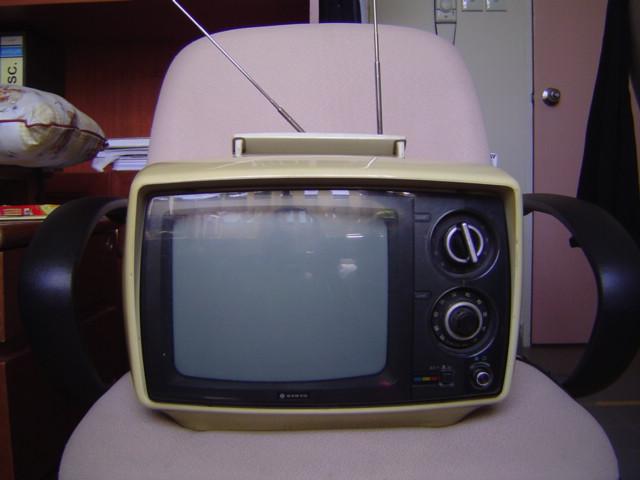
This is a brief post today as I decided to get all of my end of the year paperwork done and delivered in a single day and that required going all over town and I have just limped home at 4 p.m. (I have a foot injury that is taking its time to heal). While I was out, I dropped off my TV modem at the cable company and cancelled my TV service. I had not watched TV in about a year so there seemed little point in continuing to pay for the service. Sometime in the new year, the TV set itself, along with my DVD player, VCR and two or three old and defunct computers will get recycled together with any other antique electronics I might have stashed in the back of some cupboard. Tonight, I plan to watch Netflix and perhaps read an eBook. Perhaps some time in the future, my bookshelves will vanish too. What am I going to do with all of that space?
I started this series with a diobol and I am finishing it with another. Collectors of ancient Greek coins have limited choices on obtaining a coin depicting the facing head of Athena. The most famous example being a tetradrachm of Syracuse by Eukleidas, but at half a million Swiss francs it is out of reach for most collectors. The example on the right fetched a hammer price of only $202 US. While it was circulating in Italy, Archimedes was running naked through the streets of Syracuse shouting "Eureka". The coins of Taras are very popular with collectors because of their attractiveness and the fact that you do not need to be wealthy to collect them. The people of Taras, at that time these coins were issued would have been overjoyed that their coins were being appreciated in a world far larger than they knew more than two thousand years later. Most of those issues (and the same is true for all Greek city-states) bore designs to promote their city and culture. Today, we call this "branding".
The mythological types of Greek coins reveal how mythology was reinterpreted anew for each place and time and that is the nature of cultures. What is current, now, is obsolete tomorrow; new deities are constructed from the remains of old deities. If cultures are to survive at all, in minds, they have to connect in a very personal manner. I connected with the sea monster Skylla on a fishing trip off the coast of British Columbia and that event will be in my mind each time I see Skylla on a helmet design. Had I not bought a corroded Celtic coin from Seaby in London when I was about fifteen years old, I would never have written my book, nor put the Celtic Coin Index on line. Not once, though, did any visit to a museum ever change my life. Locked away in cabinets; behind glass, or with museum staff making sure that you do not touch, the cultures are killed because we can no longer connect with them in a personal way.
Even this series would have been impossible without CNG's policy of allowing the use of their many photographs to be used as I have used them here. Most museums will charge exorbitant sums for such use. A few, like the British Museum and a couple of American museums do allow such usage but others, like the Museum of London will not even allow you to sketch something. The sterilized remains of culture are being held for ransom.
While the very small silver denominations of Taras are a good choice for collectors with a limited budget and that can include some rare types, the drachms are a large enough denomination to interest most collectors but they are not often seen. This means that they are usually more costly than the staters.
The identity of the female head on the first coin is uncertain, perhaps a Nereid such as Amphitrite, perhaps Aphrodite. Like devices on most of the coins of Taras, both are connected with the sea. The obverse continues the nautical themes with its hippocamp and shell. There are some later drachms of the same type as the staters, but I cannot find one to illustrate and even Vlasto had only a few.
The late fourth to early third century drachms, like the diobols, have little reference to the sea at all and a novice seeing one might well think the drachm was an issue of Athens. Evans explains:
"It is probable that the Tarentine drachms with these Athenian types were originally struck not for internal circulation so much as a part of the federal currency of the Italiote League, and it is noteworthy that a considerable proportion of the diobols belonging to this same federal series, presenting on one side the head of Pallas and on the other Herakles strangling the lion, which, to judge from their fabric, belong to the same approximate date as these early drachms, were struck on the same reduced standard."
So far in this series I have shown many coins that are well out of the price range of the young collector but those coins have been mostly the larger denominations. Popularity drives the market and small Greek silver coins are not in high demand at this time. When I was a kid, this was slightly less evident and it was the bronze coinage that could be bought for very little. Nowadays, Greek bronze coins are more popular and many are well beyond the price range of kids. Even bulk lots of "junk" Greek bronze fetch more than their Roman counterparts.
Unlike the larger denominations, small silver coins such as the obol were the daily currency at the market while a stater would be about a day's pay for a labourer. Here in Calgary, the legal minimum wage is $11.20 per hour and a frugal shopper can easily pay that for an entire day's groceries for one person. I do even better but I mostly cook from basic ingredients and avoid processed food. The other day I made my own cream cheese and added some smoked salmon. Much better that the store-bought version which contains carageenan (and is a little shy in the smoked salmon). Of course, the ancient Greeks cooked like I do. They also lived long lives and part of that was due to their diet.
A little frugality in buying ancient coins is also a good idea, and auctions can sometimes deliver the unexpected. The tiny coin on the left (much smaller than an obol) was estimated at $150 but got a hammer price of $1200. Perhaps this is a typo, perhaps there were two people bidding that had more money than sense, I don't know. But you will notice, that a month later, the same coin type was sold as part of the lot illustrated above (1) and the whole lot only fetched a hammer price of $300, two hundred below its pre-sale estimate. The same coin type, in 2013, got a hammer price of 110 GBP.
Back in the mid eighties, when Calgary was in the midst of a severe recession and when I applied for a job that had two hundred applicants, my wife and I decided to run a flea market business. We survived quite well. Mind you, we had six tables and sold everything: housewares, books, records, collectables, you name it. One oil company owner used to spend $200 with us at each visit as part of his Sunday routine (the market ran only on Sundays). One day, a small boy sat at one of our tables for hours, carefully going through a box of junk Roman coins we were selling at a dollar each. Finally, he handed me one coin and his dollar. I looked at the coin and said "This is a coin of Eugenius, but it is a bit small and it's not in very good condition so it's only worth about a hundred dollars." The chances of finding such a coin is remote, rather like a big win on a lottery and dealers do not waste their time looking for such, but even if that boy had a very good after-school job, his hourly pay could hardly match what he made that day.
I started this series with an photo of a diobol of Taras which was one of the first Greek coins I owned. In this episode I will start with another example to illustrate how a multidisciplinary approach can provide so much extra information and avoid silly errors in attribution.
All of these Tarantine diobols show Herakles fighting the Nemean Lion. It was the first labour of Herakles. Various versions of the motif exist on these coins but this one is particularly odd because of the owl perched on the lion's back. A cursory Google search fails to find an explanation and none is given by Evans, nor in a footnote in Vlasto. The metaphor, however, seems fairly clear to me.
The reverse design is copied from this gold coin of Syracuse and Dionysios I had loaned a Celtic detachment to the Spartans to fight against the Athenians. The owl, of course, is an icon of Athena and Athens. The obverse die of the gold coin is signed by Kimon but other varieties are signed by Euainetos and others. No signature exists for the reverse design. It is possible, as in many coin designs, that it was taken from a marble sculpture now lost. Taras had been founded by Spartan colonists and the date range of the two coins overlap. Unlike with date ranges given for modern coinage, ancient Greek date ranges only give an earliest and latest date based on various factors. It does not mean the coin in question was issued throughout that range and it is often the case that the coin was issued in a single year for a military campaign or as payment to a foreign state. The best example is the silver dekadrachm of Athens which was such a payment. They are never found at Athens, and all examples come from Turkey.
While I could illustrate another Taras diobol of the same reverse design, I have picked this coin of Herakleia. The city was founded by both Taras and Thourioi in 433 BC, and Celtic troops were used there by Pyrrhus against the Romans in 280 BC. It was this battle that gave us the term "Pyrrhic victory", meaning that the losses were so severe on both sides that perhaps "victory" is not the best term to use.
Gunestrup Cauldron plate, ca. 272-200 BC
On the Gundestrup cauldron plate to the left, a Thracian artist working in Italy has commemorated the battle by depicting a derivation of the Herakleia design of Herakles and the Nemean Lion to the left of the Celtic female who beats her chest in grief. To the right is a fallen warrior and the latter figure is also found on Armorican coins described as a "manikin" for some reason. The male central figures on the Gundestrup plates hold their arms upward in the orans position which, in this case signifies a victory as a sacrifice. Herakleia was considered a heroic loss which would have guaranteed advancement of the fallen warrior in his next life. The Celts believed in the transmigration of souls, and this belief might have originated during their service in the Mediterranean, or was syncretized between a similar belief of their own and the the same Pythagorean belief in Italy.
More influences can be seen in the pastiche of images to the right that I made many years ago. The top right is a detail from the Stara Zagora phalera which has been used to (incorrectly) associate the Gundestrup Cauldron with the Cimbri and the eastern Celtic tribe, the Scordiscsi. It demonstrates the foolishness of using findspots as absolute proof of origin and fails to understand that ancient artisans often moved around quite a bit.
Anders Berquist and Timothy Taylor said of the Gundestrup cauldron: "How Thracian silversmiths occupied themselves in the interval between the late 4th and late 2nd/early 1st centuries BC is unclear." That would be because the dating is wrong.
Flemming Kaul cites a phalera of the same style which was bought in Istanbul but is of uncertain origin as further evidence to this erroneous dating as it has an inscription to "King Mithridates" which he associates with Mithridates VI of Pontus who ruled at the time given to the cauldron. The name Mithridates in the ancient near east is as common as "John Smith" and the Mithridates in question is far more likely to be Mithridates II of Commagene who was restored by Augustus in 20 BC. (one of his "puppet" rulers). So much for the Cimbri/Scordisci connection. In fact, the Stara Zagora hoard also contained silver vessels of Augustan date and phalerae were very fashionable giftware during the time of Augustus.
Art-historical analysis, abandoned by most archaeologists as a consideration (making a virtue out of necessity) is essential when talking about ancient designs. It is very easy to see that the head of Herakles on the Stara Zagora phalera was copied from the denarius of M. Junius Brutus of 54 BC (top left). All that is different is that the head has been given a Herakles nose. The rest is a fairly close copy. This denarius circulated widely in Thrace. The artist of the phalera also combine the Syracusan Herakles design with another gold coin from Taras (bottom right) where Herakles is wielding a club, sadly, he placed the arm, upside down.
The Stara Zagora phalera is an example of what I am calling the Thracian Revival and I am sure that this was also originated by Augustus for another of his puppet rulers, Rhoemetalces I of Thrace. It is marked (on all examples) by background chasing of far more loose execution than is found on the earlier native Thracian styles which had gone out of fashion around the time of Lysimachos in favour of Italian and Sicilian Greek classical art, much of which reflects the work of Kimon and Euainetos. The Sark hoard of phalera (from the Channel Islands) is of the same period.
Neither nationalism nor time can constrain art and a culture of 300 BC is most often markedly different than a culture of 200 BC even in the same place. In my life, so far, I have experienced at least ten different cultures and most of them were in Calgary. No one "with an eye" would mistake the plaque on the left for anything other than Renaissance art, but it is done all the time. Repatriations of art objects mix psychological factors and nefarious political motives. I suppose that even this is yet another culture to add to the mix! It is already showing signs of become rather worn out, though, and undoubtedly will go the route of bell-bottom jeans or overly wide ties. The only photograph of my face on the web other than my photo-derived logo is this one of 1975 with the original fan-dancer, Sally Rand. In the article, I say that I look like a survivor from "That Seventies Show"